Blog Guide
Live chat on your website: benefits and challenges
Live chat is fast, convenient and popular with online shoppers, but it has downsides too. 10 benefits and 3 challenges to weigh before you add it.

This article is from Askly’s early days, when the company was called TranslateWise.
Online shoppers increasingly expect to reach a store in real time. But is live chat right for your business, and can your team keep up?
Many companies now make live chat their main support channel. It’s simple, convenient and fairly cheap, and many customers expect it.
We looked at what online shoppers say they want. This overview is for businesses that already use chat and for those still considering it.
Here are 10 benefits and 3 challenges to weigh.
Why customers like live chat
1. Faster support and easier feedback
For customers, live chat is a fast, simple way to reach you. A simple question usually takes 1 to 2 minutes to answer.
Chat is convenient even for small support teams, because each support agent can handle several requests at once.
It’s an easy way to collect customer feedback, too.
2. Freedom, a personal touch and privacy
Live chat lets customers keep browsing, posting or working while a support agent handles their request.
Customers write less formally in chat. That helps your team understand them and match each customer’s writing style, so the connection feels more personal.
Unlike email, chat doesn’t require customers to share information about themselves. That makes it popular for sensitive topics, such as medicines, skincare or underwear.
3. Easy to find, so fewer abandoned carts
Customers find you right away, without hunting for contact details or email addresses. They spot the chat, open it and they’re already talking to you.
They get answers without clicking from page to page. Because those answers come at the right moment, fewer customers abandon their carts.
4. Many shoppers expect it
One of live chat’s biggest advantages is its popularity. Many consumers now take it for granted that an online store offers live chat.
How live chat helps your team
5. Lower costs than a call center
A live chat team is cheaper to build and run than a traditional call center. Problems get solved faster, which keeps costs down.
6. Less burnout and less damage to your reputation
Live chat gives angry customers a private space to blow off steam. If they use the chat, they’re less likely to vent on public social media.
Instead, you get the chance to turn a bad experience around with support, understanding and a fitting solution.
Angry or upset customers can drain support agents. Even when the problem gets solved, phone and email support take more out of them.
Chat lets support agents keep some emotional distance while they focus on the problem and the best way to solve it.
7. All your social media chats in one place
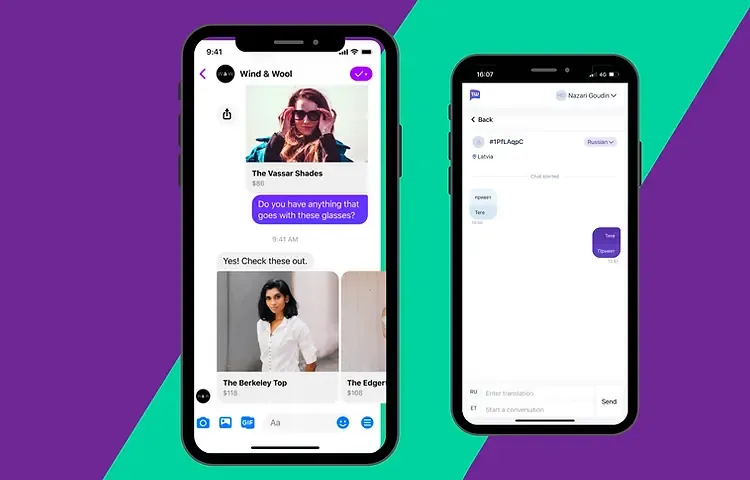
More and more companies talk to customers through Facebook Messenger. TranslateWise chat brings your social media conversations into one place.
You save time and don’t have to keep switching between apps. Customers get served faster too.
How live chat helps you sell more
8. Support in your customers’ languages
For many companies, real-time translation is one of the main benefits. Conversations are translated as they happen, which makes it easier to sell abroad.
9. More online sales
Live chat is both a service tool and a sales tool. You can:
- invite visitors to chat, as long as the invitation helps rather than annoys
- make special offers based on which pages visitors see and for how long
- find out what else might suit them, and guide them toward it
10. Faster fixes for website problems
Live chat also helps you spot user mistakes and website errors. That’s one of its lesser-known benefits.
Say a customer has forgotten their password, found an error on a page or can’t complete a purchase. They get help quickly.
And you can fix frequent errors before they do more damage.
3 challenges to plan for
Live chat has its downsides too.
1. It works less well for older customers
Texting is common in most age groups. But older customers are less likely to use live chat to contact a company.
Depending on your audience, you may need another channel too, such as phone or email.
2. You need to reply fast
Customers expect quick replies. Ideally, a chat message gets a reply within 1 to 2 minutes.
As with the phone, you need support agents online, with the chat app open and ready for each new question. Often the same person handles both phone and chat.
At peak times you may need more support agents, which can add costs.
Still, chat has an edge over the phone. The customer can leave a message, and your team can reply when someone is free.
So the pressure to be available is lower. But you still need enough people on busy days to keep customers happy.
3. Some cases need identity checks
Customers can’t always stay anonymous. In some cases, such as online banking, personal data can only be accessed after secure identification.
You may need a phone line, or a way to verify customers right in the chat.
Where Askly fits
Much has changed since the TranslateWise days. Today, Askly is one AI agent across web chat, Facebook Messenger, Instagram DMs and email, with one inbox for your team.
- 3 modes. Fully AI, AI + team, or fully human. In AI + team mode, a person takes over mid-chat with the full context.
- Phone calls too. The AI Voice Agent answers on your own number, around the clock. It says it’s an AI.
- Translation built in. Askly detects the customer’s language automatically. Your team answers in its own, translated in real time, both ways.
Is live chat right for you?
Live chat has many benefits. The biggest may be that many customers prefer it when they deal with online stores.
It also helps you build better relationships with customers and grow your sales.
If you’re weighing whether live chat is right for you, be honest with yourself and ask:
- Am I ready to offer quality customer service through chat?
- Am I ready to commit the resources to make sure people are available when customers need them?
- Who are my customers, and what do they really prefer?